|
|
 |
|
|
| Margot & Rudi |
|
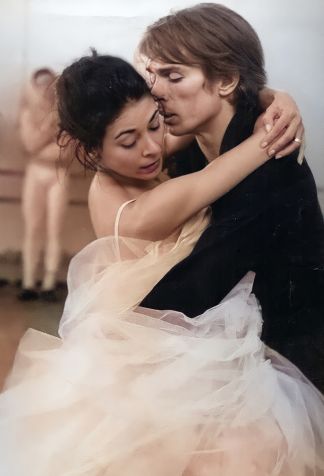
Biopic of Margot Fonteyn and Rudolf Nureyev. A love story.
A beautiful woman falls in love with a brilliant, adoring young man. Their love is doomed, it will all end badly – in heart-swelling, tear-jerking delicious tragedy. Every night, on stage, in front of thousands of enraptured fans.
When Margot Fonteyn meets Rudolf Nureyev, she is the most famous ballerina in the West and he is a worldwide sensation – the first great artistic defection from the Soviet Union, at the height of the Cold War. She is gracious, divinely elegant in Dior, with a wonderful smile and charming humility. He is wild, sexually magnetic to men and women, a proud, shy, untamed creature.
Together they will become one of the iconic couples of the Swinging Sixties. The romance they portray so movingly on stage is confirmed for the delighted public by their obvious intimacy and happiness together offstage. Real life is not so simple.
|
|
|
When Margot and Rudi start dancing together at the Royal Ballet, she is a star on the wane, already old for a ballerina at forty-two. Rudi’s arrival gives her a miraculous second wind, galvanised by his energy and love. But she is married to a roguish Panamanian politician – Tito de Arias – who barely conceals his philandering. Rudi falls hard for Erik Bruhn, a handsome, highly intelligent man and outstanding dancer, who just can’t cope with Rudi’s go-for-broke approach to life.
Margot and Rudi turn to each other from their relationship problems, growing ever closer. Spurred on by Rudi, Margot asks Tito for a divorce but - days before she can be free - Tito is shot and paralysed by a rival. Trapped by her own image, sacrificing herself like the Swan Queen, Margot decides she must stay and care for Tito.
The only way Margot and Rudi can be together is on stage. They need a ballet, made just for them, that will encapsulate their romance for all time. And the ideal story is happening right in front of them – a bold retelling of Romeo and Juliet by the hot young choreographer, Kenneth Macmillan. There’s only one catch – it’s being made for the rising stars of the company, Lynn Seymour and Chris Gable.
To live out their perfect romance, they must steal their perfect ballet. Heartbreak and treachery are no longer part of the fairytale, but brutally real.
A Good Chaos, Sympathetic Ink, Elysian Films Production, Screenplay by Olivia Hetreend, Director: Anthony Fabian. Producer: Mike Goodridge
|
|
|
|
 |
|
|
|
|
| Good Hope |
|
WATCH NOW at www.goodhopedoc.com
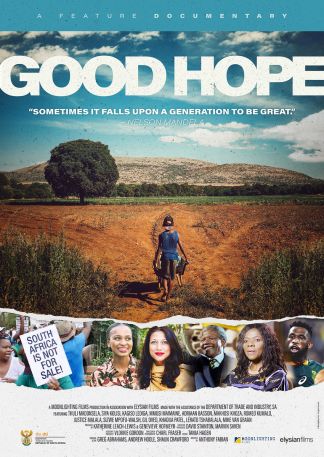
South Africa has a long and complex history. The legacy of colonialism and apartheid hang over it like dark clouds, and despite the avalanche of hope its liberation brought in 1994, there persists a negative narrative about the country that is difficult to shake. This is not helped by the fact that South Africans are statistically the most pessimistic people on earth!
And yet… there is another story to tell, about the astonishing efforts of a new generation set to tackle country’s problems, in what has been called the "Second Revolution”. The ANC, under the new leadership of Cyril Ramaphosa, is making strides to restore the rule of law and tackle corruption. With this comes confidence in open governance and the opening of doors, once again, to the rest of the world. |
|
|
And the new generation of South African movers and shakers - entrepreneurs, educationalists, doctors, artists and leaders - who are at the core of this film, are a huge source of inspiration and hope.
What South Africans offer as a an example to the rest to the world is a unique ability to band together and overturn social ills: toppling apartheid, rooting out corruption – and continuing to find ways to heal and create a fairer, more cohesive society.
We all need hope.
|
|
|
|
 |
|
|
|
|
| Who do you think we are? |
|
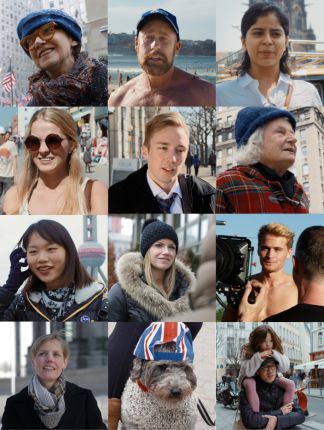
A new promotional film for the UK tourist board, VisitBritain, shot in eight cities around the world: New York, LA, Sydney, Shanghai, Mumbai, Dubai, Paris and Berlin. Director Anthony Fabian canvassed opinions on the streets about what Britain means to visitors and how they feel about the UK - with touching, surprising and often humourous results. The film will soon be available on Youtube, Twitter, Facebook and www.visitbritain.com. |
|
|
Part of the government's GREAT camapaign, this is the first of a series of films that will follow the multi-city, international format. Rather unusually, Britain is being promoted without showing a single frame of the country - but a picture is built up in the imagination of the viewers through the descriptions of ordinary people. |
|
|
|
 |
|
|
|
|
| Freeze-Frame |
|
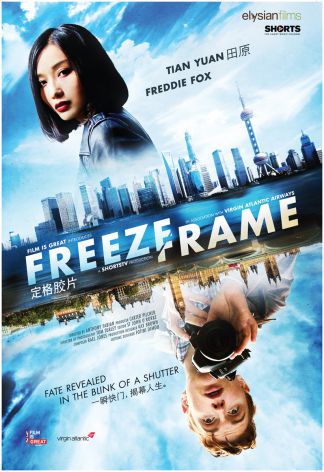
Freeze-Frame is a romance and a thriller with a comic edge. It's about fate, mix-ups and attraction across the cultural divide. It also features some iconic locations from successful British and films and TV series - namely Downton Abbey, Harry Potter and Love Actually. First previews were held in Los Angeles from 29th November at the Laemmle West LA and the Beijing Premiere was 1st December 2014. Currently showing in the GREAT online film festival: www.filmisgreat.cn. |
|
|
Freeze-Frame is a new short film starring Freddie Fox (Pride, Riot Club) and the dynamic young Chinese actress, Tian Yuan. Sponsored by the Foreign and Commonwealth Office, VisitBritain and Virigin Atlantic Airways as part of the government's GREAT campaign; its aim is to promote British talent, locations and expertise in China, following the signing of a new co-production agreement between the two countries. Written by the Brothers Lynch, the film is Executive Produced by Carter Pilcher of Shorts TV, in association with Elysian Films, and directed by Anthony Fabian. Shot on location in London, Edinburgh and Shanghai in October and was released in Los Angeles and Beijng 1st December 2014. |
|
|
|
 |
|
|
|
|
| Debs |
|
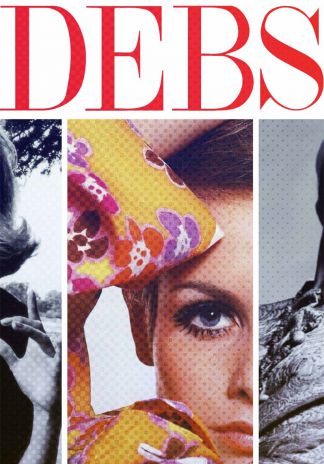
Madmen meets Downton Abbey: A new long-running TV series. Adapted from Fiona MacCarthy’s acclaimed book, Last Curtsey, DEBS follows the lives of four friends from their ‘coming out’ rites in 1958 to adulthood in the emancipated world of ‘60s London. The series charts the women’s interconnected lives over a ten year period: from the last presentations to the Queen and the debutante season that followed, to the revolutionary, anti-establishment prism of sex, drugs, fashion and rock and roll, dramatising the breakdown of the class system and women’s lib. DEBS will counterpoint the hide-bound late 50s with the world of swinging ‘60s London, just as Downton Abbey has given the world access to high society at another time and place, and Mad Men has brilliantly illuminated advertising in New York across the same era. |
|
|
London 1968: the class barriers have come down. Aristocratic girls dressed like gypsies are the envied lovers of working class rock stars. The Pill has liberated young, unmarried women, there’s no good reason not to have sex anymore. Anti-Vietnam protests in front of the American Embassy turn into a full-scale riot; to be anti-war now is brave not cowardly. Boys’ hair is long, girls’ skirts are short, music is loud and sounds even better if you’re stoned. Izzy Mactavish, 27, a struggling writer on a left wing newspaper, is unexpectedly called into her editor’s office and shown a front page photo of a disheveled girl thrusting her fist into the air under the headline: “IRA Terrorist Arrested”. The editor produces a second photo dated 1958, of four seventeen year old debutantes in long white dresses descending a staircase at Queen Charlotte’s Ball. The IRA terrorist is one of them, and holding her hand is Izzy. Over the protests of the paper’s senior writer, Izzy is given her big break and assigned the story, a story she doesn’t want to write. A story about a life she turned her back on, about friends she hasn’t seen in a decade. A story about four English debutantes and an American heiress, their Season in 1958 and how the life they were brought up to live vanished.
1958 was the last year that debutantes were presented at court to the English monarch. The new, young Queen Elizabeth II announced that she was stopping this 200 year old tradition. The reason the tradition was coming to an end was, as the even younger Princess Margaret put it, “Because every tart in London was getting in.” Although not English, and not tarts, Americans were part of the problem…
Over the course of the series, we will flash backwards and forwards within the decade – tracking the irreversible changes that broke down the class structure and these liberated women – as well as their brothers, fathers, husbands and lovers - forever.
|
|
|
|
 |
|
|
|
|
| British Legends of Stage and Screen |
|
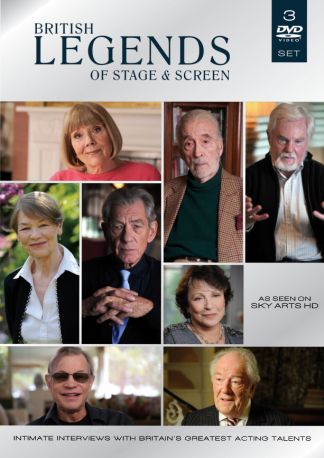
Now available on DVD from Amazon UK
A new series of in depth interviews with Britain’s finest post-war actors, reflecting not only on their careers in theatre, film and television but also on a changing time, a life of extraordinary encounters and the events that shaped their lives.
Starring Claire Bloom, Sir Michael Gambon, Glenda Jackson, Sir Christopher Lee, Michael York, Dame Diana Rigg, Sir Derek Jacobi, and Sir Ian McKellen.
Executive Producer: Sandy Lieberson. Co-Producer: John Dunworth. Sales: Dominic Saville, 3DD Entertainment.
DVD Released by Odeon Entertainment UK
|
|
|
Late 1940s/early 50s: Britain is emerging from the gloom and austerity of the war years with an appetite for change and fresh optimism. Social upheaval and urban renewal brings with it a demand for different forms of culture and entertainment. It is a time of enormous growth for the British entertainment industry and new stars are bursting on the scene to lead the way.
Dozens of these extraordinary artists are still alive today. These cultural icons, whose collective memories and experiences are of incalculable historical value, are taking part in an exciting new interview series called British Legends of Stage and Screen.
The actors’ exposure to the enormous changes that have taken place in theatre, film and television over the past sixty years, their work with the greatest texts, fellow performers and directors, their enduring careers and contributions to new artistic visions and movements, are the foundations of modern entertainment and make for essential viewing.
Many grew up either just before or during World War II, when an established network of repertory theatres was still central to the nation’s cultural life (Angela Lansbury). RADA, where many of them trained (Glenda Jackson, Michael York), underwent a radical transformation, from a finishing school for the children of the upper classes, to a serious vocational institution for actors from all backgrounds who were soon to gain recognition as some of the best in the world. The new National Theatre, established by Sir Laurence Olivier at the Old Vic Theatre, reclaimed the legacy of the past with a canon of classic plays and became another training ground for many of our actors (Michael Gambon, Derek Jacobi). At the same time, new writing at the Royal Court galvanized this generation to forge new pathways for performance and redefine the theatrical experience (Glenda Jackson, Claire Bloom).
The British film industry was also emerging, partly due to the role of film in the government’s propaganda and communication strategies during the war and the popularity of Hammer Films (Christopher Lee), and partly as a reaction to the Hollywood studios, giving rise to the British Free Cinema movement (inspired by French New Wave, Italian Neo-Realism and “auteur” cinema). Many of the British Legends were pioneers in this movement, starring in films such as Look Back in Anger, Accident and Blow-up.
The newest medium, television, led to the demise of repertory theatre but brought culture and entertainment into the homes of millions of people, giving birth to innovative writing which broke free of conventions; here we have Diana Rigg on The Avengers and Michael Gambon on The Singing Detective.
This generation of British actors are the standard bearers of a cultural new wave that took the world by storm. Many of them are still working, and all have left a lasting legacy.
Here are some of their voices. |
|
|
|
 |
|
|
|
